Ostia Antica: A Masterplan for the 15-Minute City
Project details
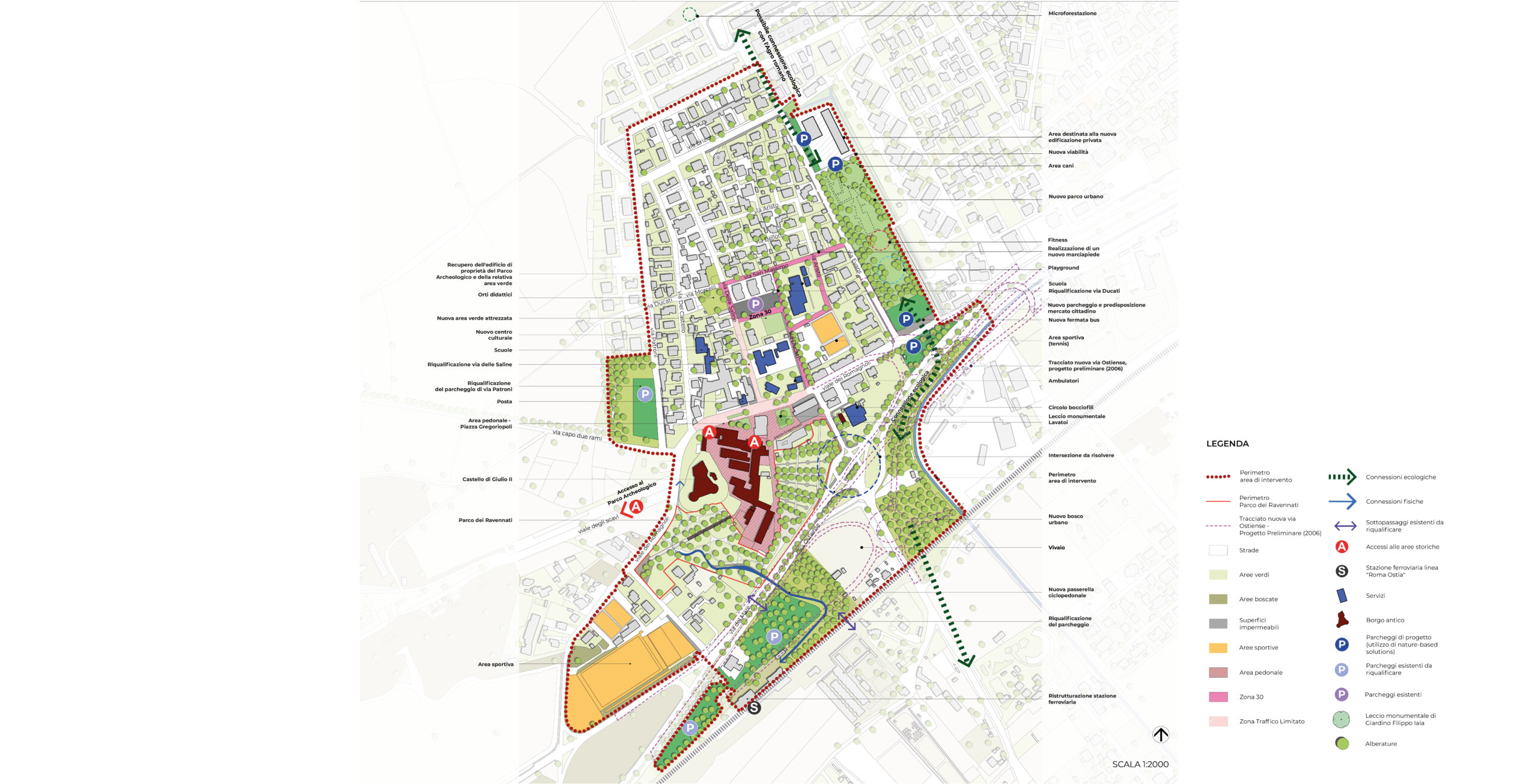
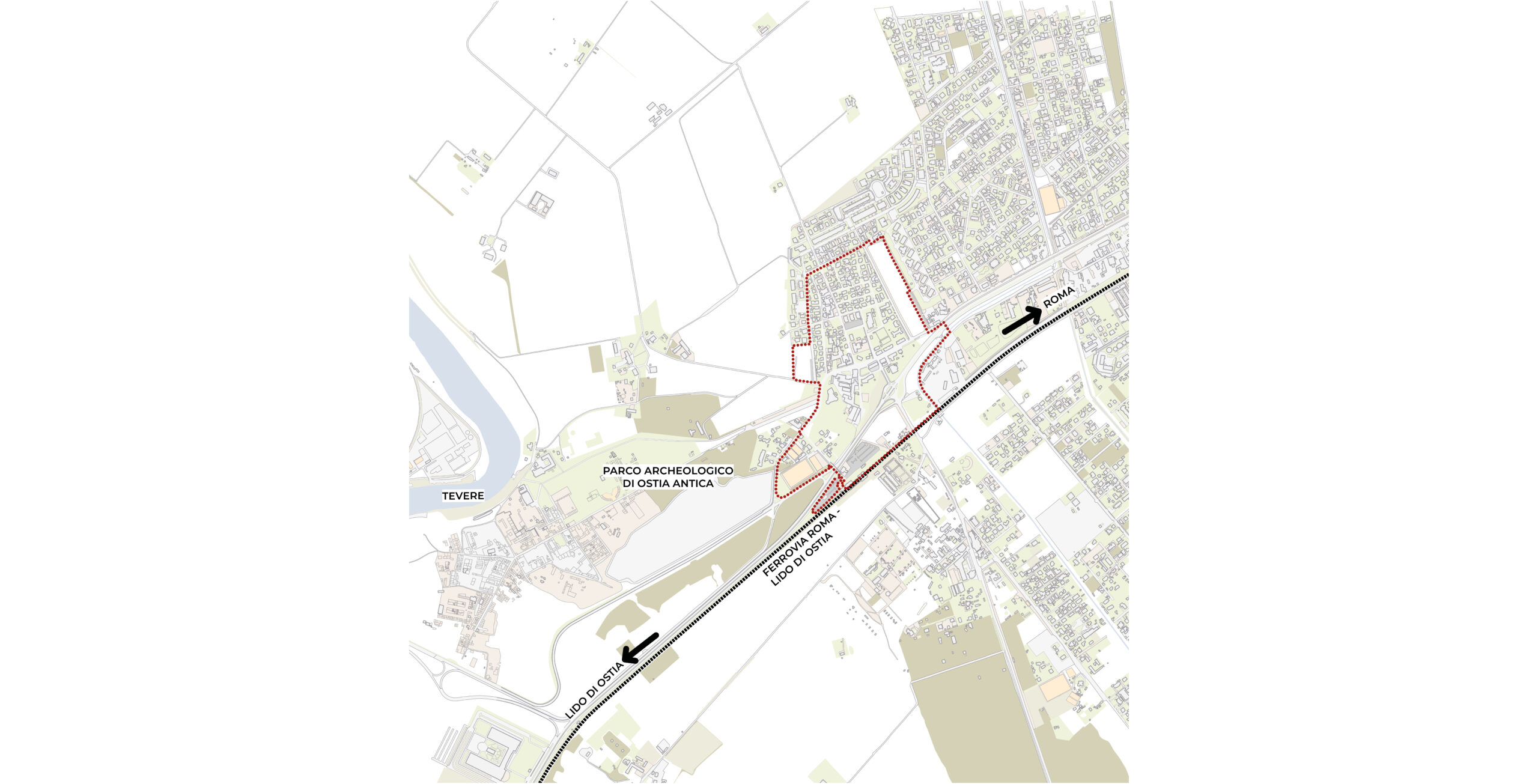
The Masterplan for Ostia Antica is part of the “15 Municipalities – 15 Projects for the 15-Minute City” programme, aimed at regenerating public space and strengthening the relationship between the city centre and its peripheral areas. The project area, located between the medieval village, the Archaeological Park and the Tiber River, combines a rich historical and cultural heritage with a number of critical issues related to mobility, accessibility, the lack of pedestrian spaces and the degradation of some green areas. The objective is to transform the area into a “15-minute city”, where services, green spaces, schools, cultural facilities and recreational areas can be reached quickly on foot or by bicycle. The strategy is structured around three main themes: connections with nature, through the river, the nature reserve and the Roman countryside; historical and archaeological connections, enhancing the castle, the medieval village, parks and historic washhouses; and recreational connections, creating a network between schools, sports facilities and play areas.
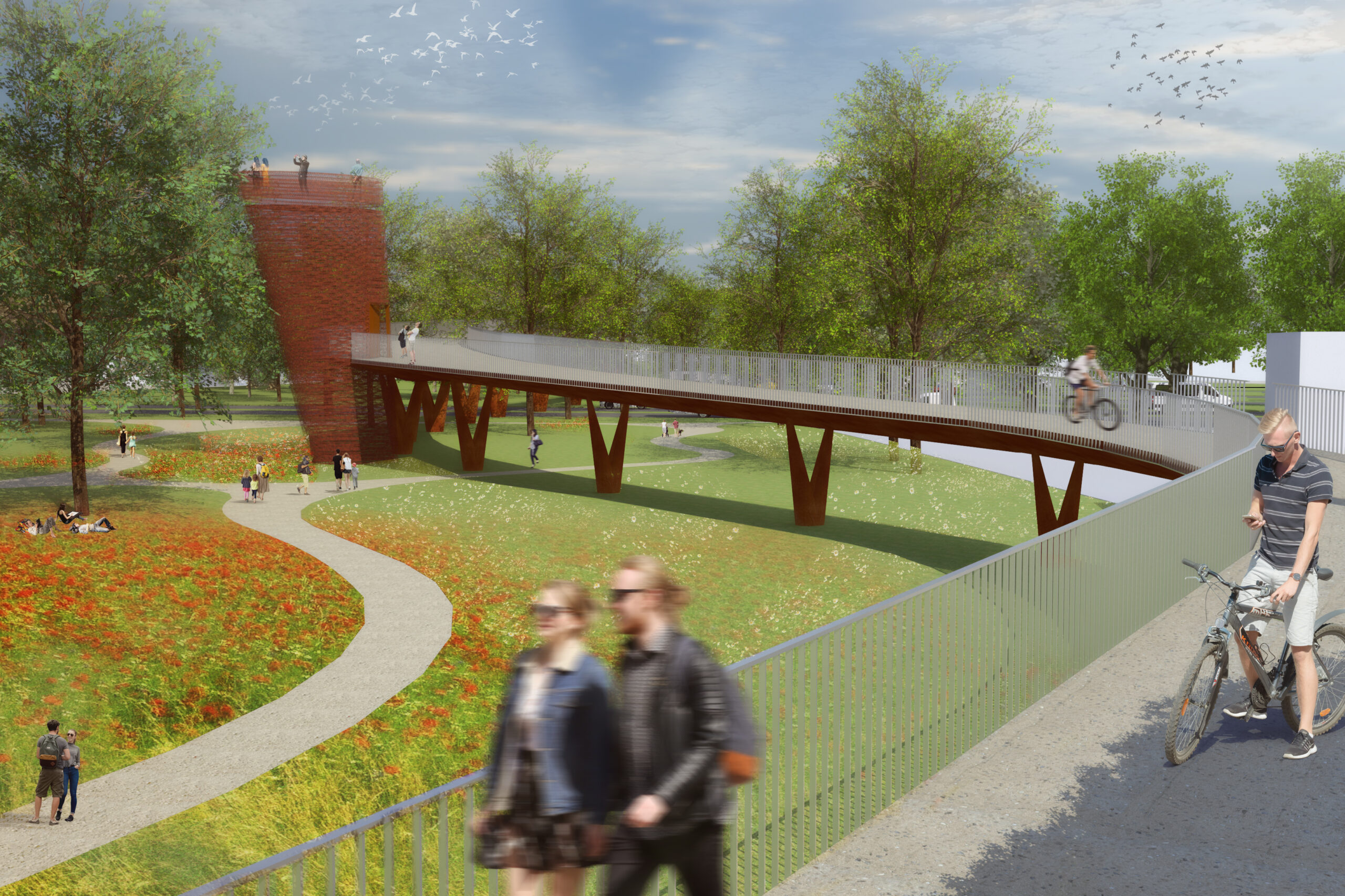
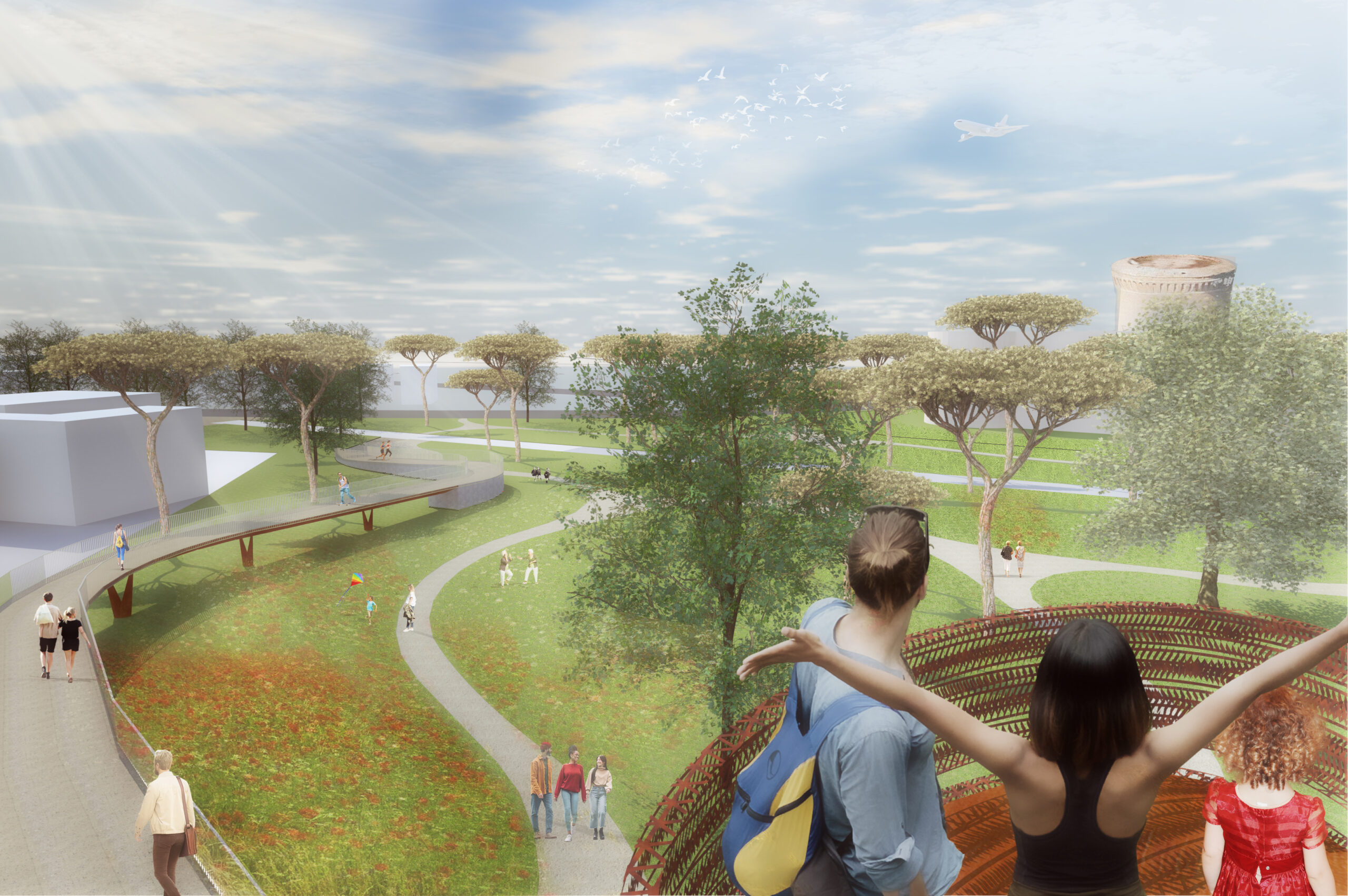
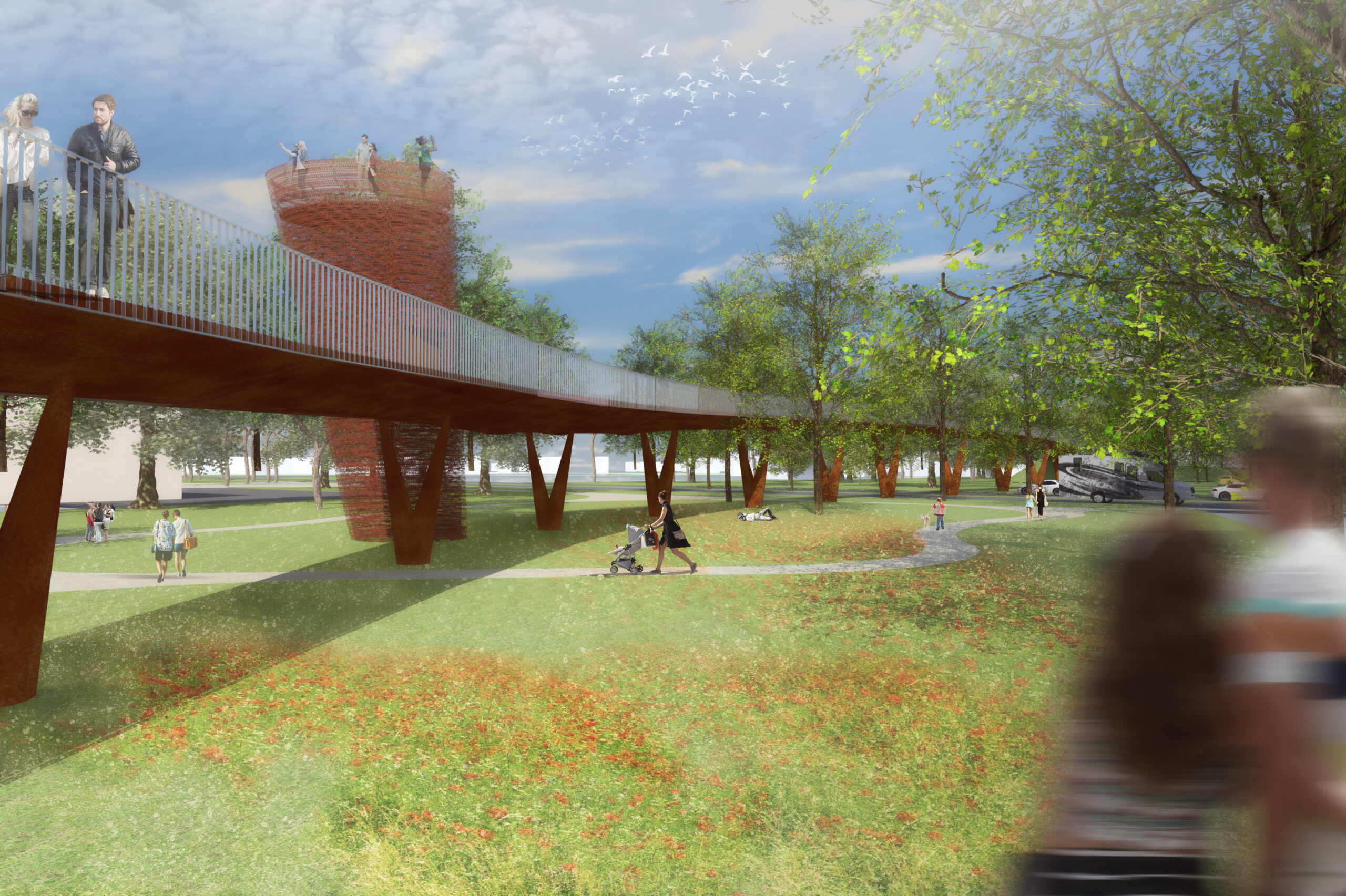
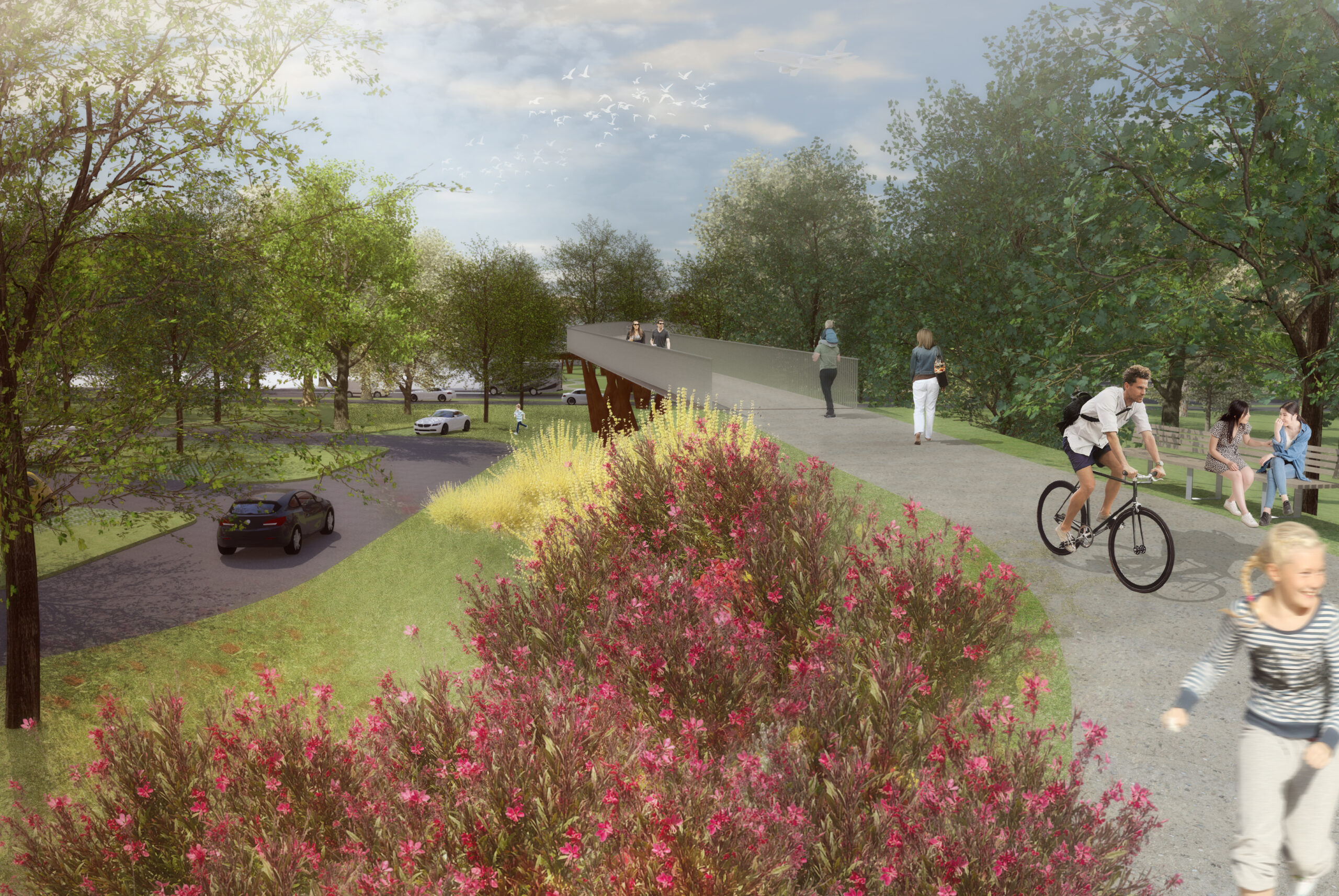
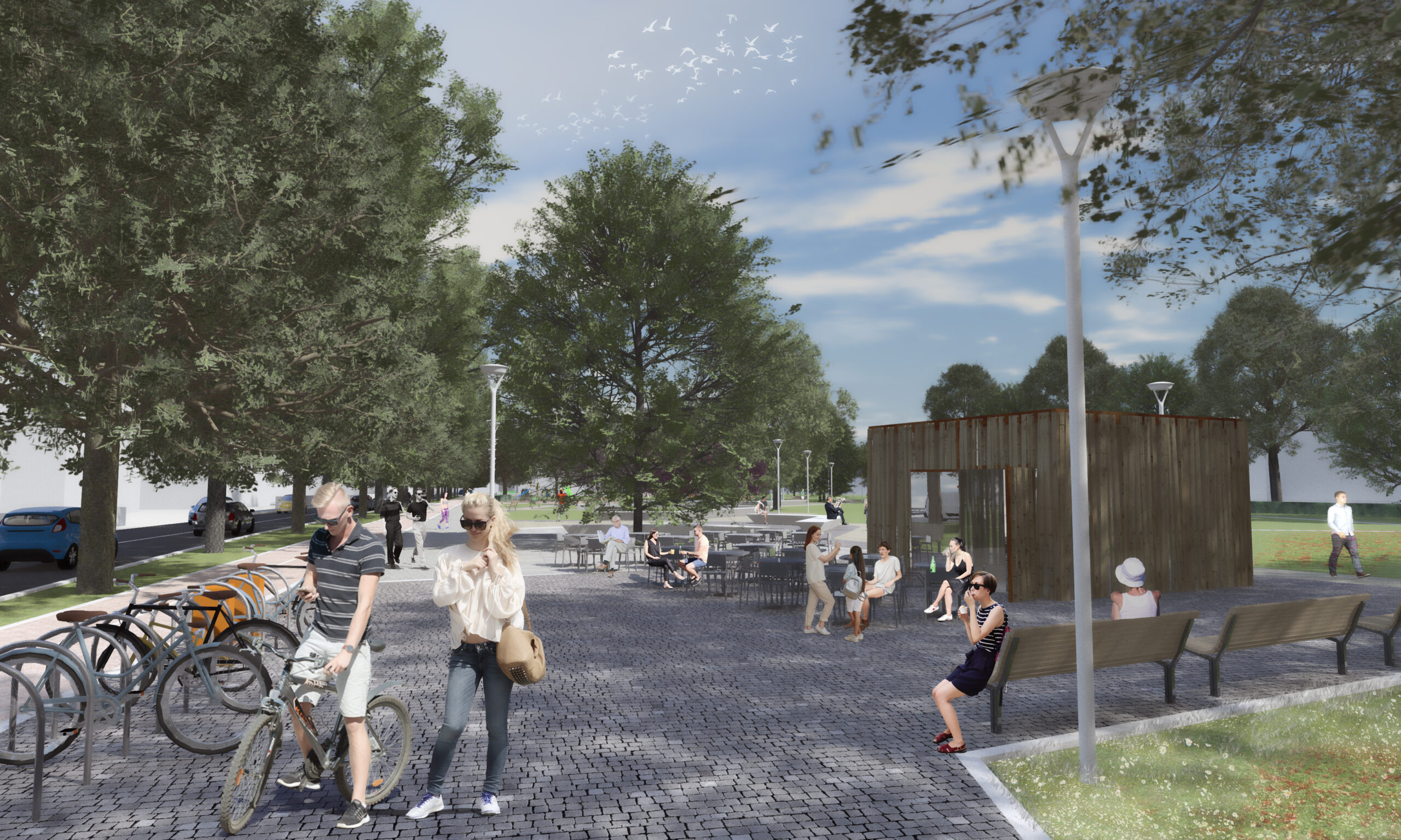
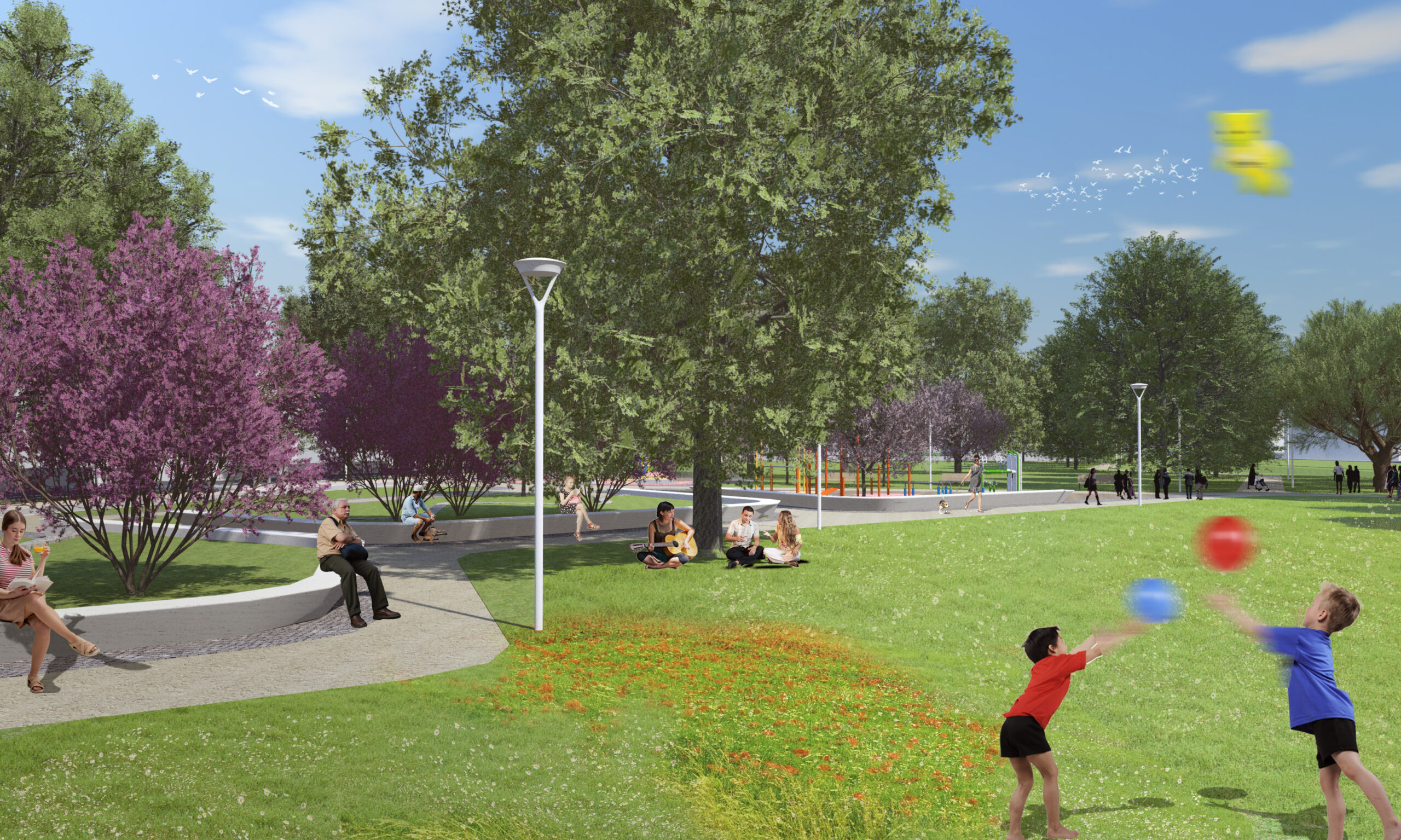
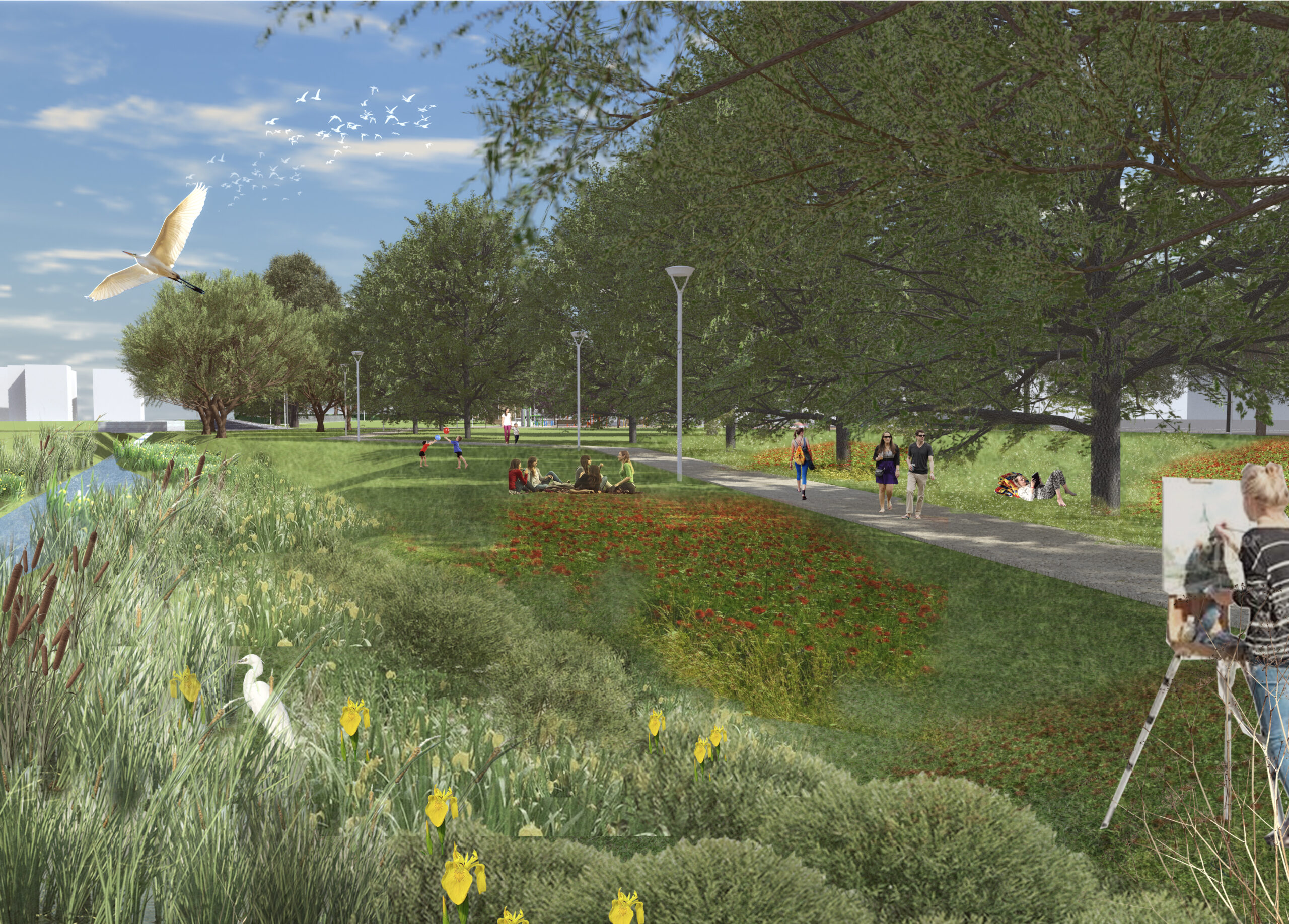
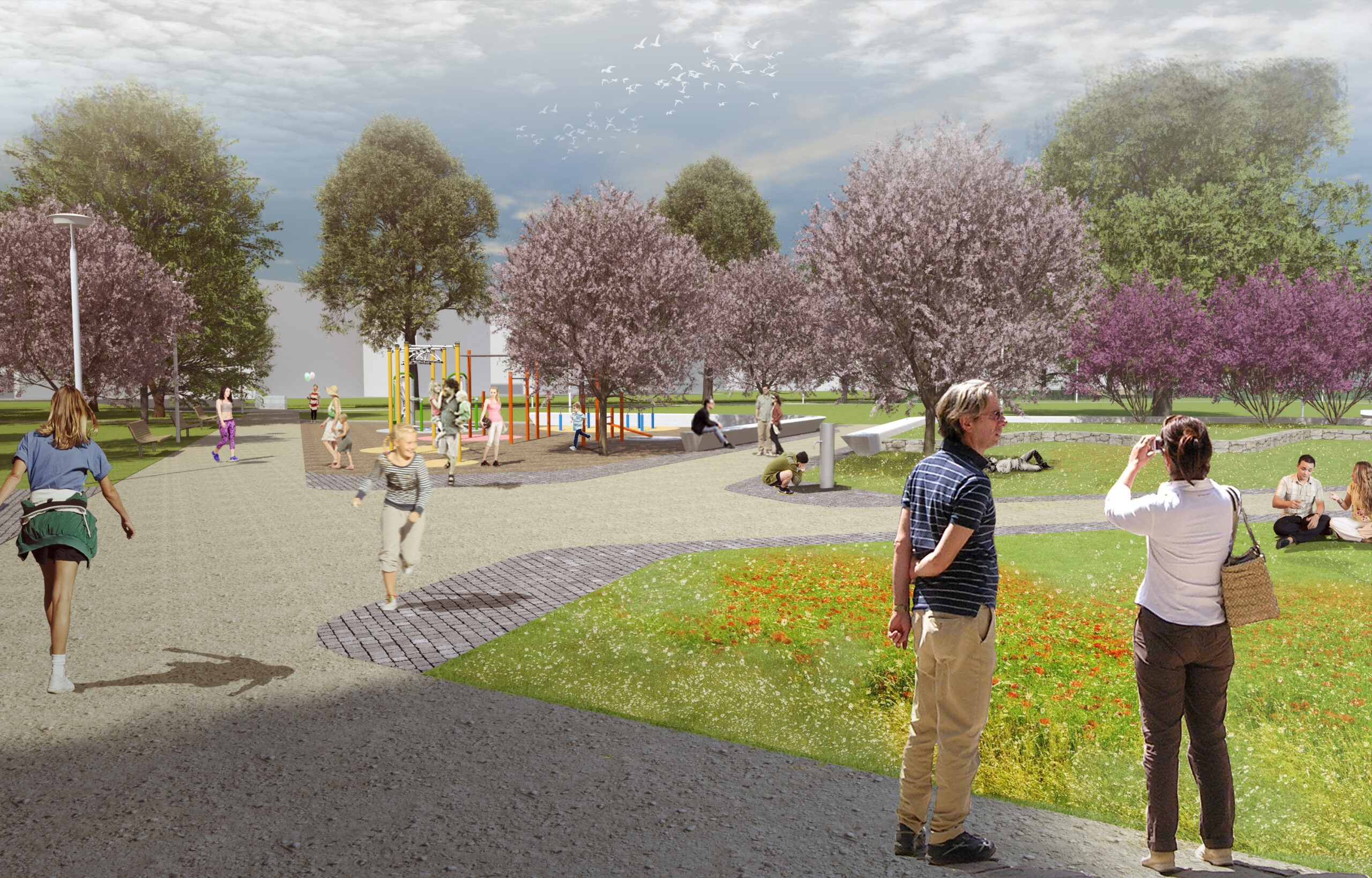
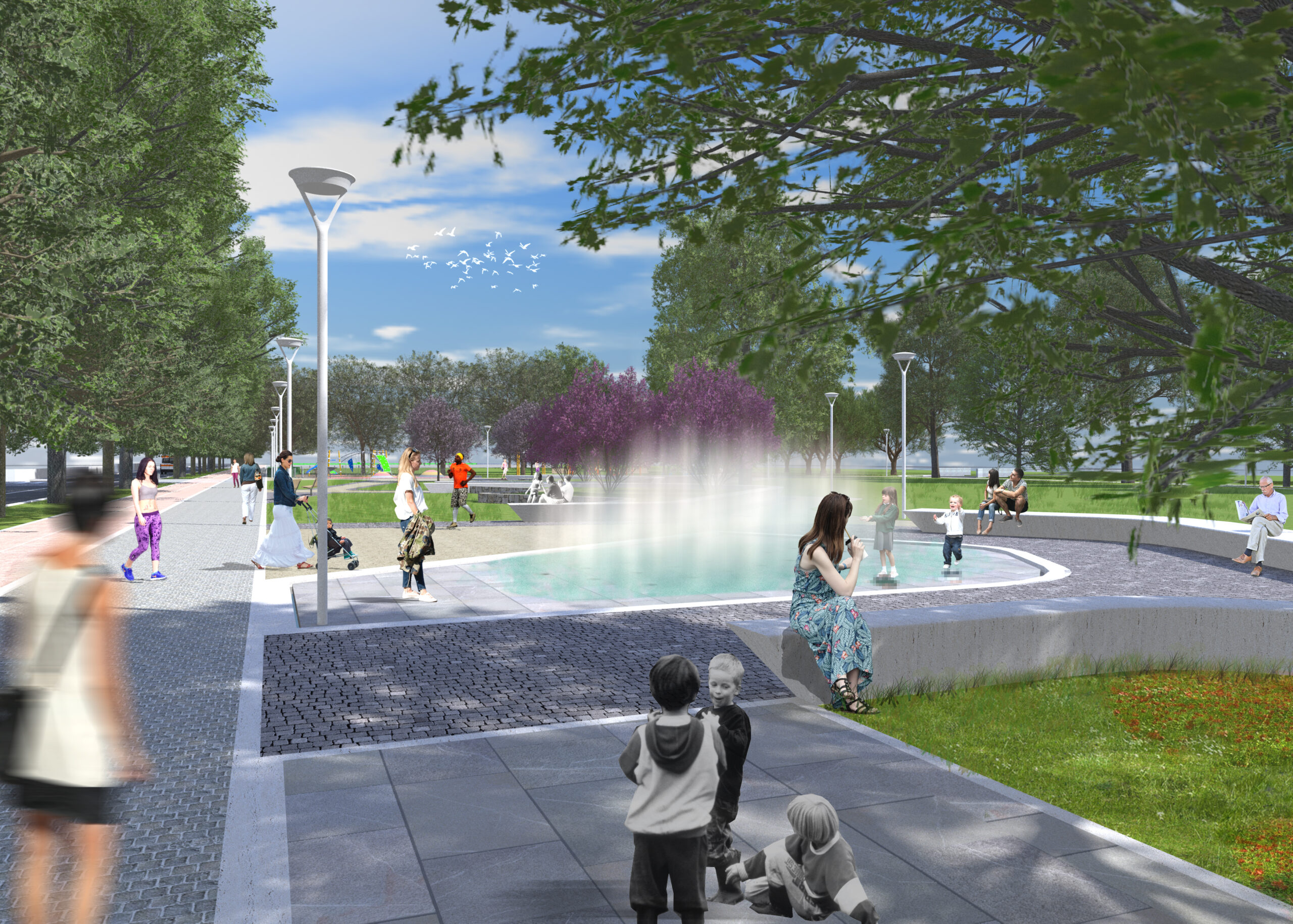
The project includes the redevelopment of the railway station car park with permeable surfaces, an increase in tree planting and a new inclusive pedestrian and cycle footbridge connecting to the Parco dei Ravennati. It also provides for the creation of Piazza Gregoriopoli as a new urban focal point, enhancing the monumental holm oak and pedestrianising part of the historic centre, as well as the development of a 20,000-square-metre urban park in Via Evans, featuring play areas, fitness facilities, a market area, spaces for outdoor events, themed gardens, a wetland area and habitats designed to enhance biodiversity. Additional interventions include micro-forestation, educational gardens, new equipped green spaces and the extension of 30 km/h zones to encourage walking and cycling.
The use of nature-based solutions, such as permeable paving, strategically designed green spaces and sustainable stormwater management systems, helps mitigate the urban heat-island effect and improve the urban microclimate. Together, these interventions strengthen local identity, enhance the historical and archaeological heritage and improve quality of life by creating inclusive, sustainable and community-oriented public spaces.